Ending physical media
Sony is ending the production of game discs. What do I think about that?
I created a Steam account in 2006. I had resisted it for what felt like a long time (it turned out that it was only 3 years), but I found a copy of Team Fortress 2 in a clearance bin and decided that I'd take the plunge to see the fuss was about. Even after creating the account, I resisted using it for much. I had a decent library of games on my shelves already, and Steam was just one of a bunch of game launchers/stores that wanted me to install them to manage my games. I didn't want to have a half-dozen downloaders on my machine all trying to keep my stuff in sync.
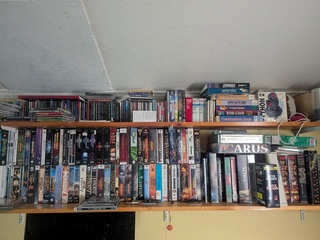
Figure 1: A sample of my PC game collection
Time marched on and I eventually bought a lot of Steam games that I've never played1. And I have a few games across several different launchers that I don't even have installed2. I also cycled through a bunch of video game consoles, and even though I preferred physical games wherever I could get them, I did start to give in a little bit and make some digital purchases.
I get why these digital stores exist. Digital distribution is cheaper and easier (i.e. profitable). Smaller developers with smaller games can actually bring their games to market without having to raise the funds to press some minimum number of discs. Episodic games were going to be a big thing3, and digital distribution is good for that. There are benefits.
But there are also drawbacks. If you get a game you don't like or are finished with, you can't resell it to someone else4. Licenses are tied to your account, so if you get banned from the platform, you can lose all of your purchases. Once you've been on a platform for long enough and have made, potentially, a couple thousand dollars' worth of purchases, the opportunity cost to leave the platform rises.
I was a business major in college5, so I get all of that.
It's not a surprise to me, then, that Sony is finally taking the next logical step (for them) and putting the plan in motion to stop manufacturing disks for new games starting in 2028. Which means that at some point in the not-too-distant future I won't be able to buy discs for my PS5 anymore, and the PS6 or whatever is going to be a digtal-only console, and that means that I will have some decisions to make.
You can look around this site and see that I have a lot of video games. I've spent decades building up a library of games that mean something to me. Granted, some are just trash I pulled out of a clearance bin, played once, and then set aside, but most have memories associated with them6. And I'm fortunate enough to have room to store all these things.
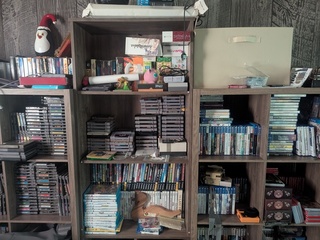
Figure 2: A sample of console games within arms' reach
I think this collections represents a pretty good core-sample of what video games were like from the pre-crash era through today7.
It's been an amazing journey to see video games evolve through those generations in real time. But I don't have as much fun with today's games as I had back then, and haven't for a while. I admit that it could be me, I'm not the same person I was in those days. But the games industry isn't what it was, either. I had more fun reading about them, playing them, owning them, and collecting them back then than I do now.
Reading
I used to get most of my video game info from magazines and books8. The argument could be made that magazines like Nintendo Power were thinly-veiled advertising vehicles, and I wouldn't fight you too hard on that. There is a blurry line between coverage intended to convince you to buy a thing and coverage intended to tell you about the thing that you might end up buying if it sounds cool.
Advertising vehicles or not, books and magazines that covered games were fun. Or, at least you could tell that the people who were writing them were having fun. Part of that is because these things didn't cover industry news like game studios shutting down or how some developer turned out to be a creep. It's not that these things aren't important, they are, but it's weird to mingle a casual overview of a cozy Mundane Task Simulator™ with article about The Very Worst Kind of Person© sprinkled in with tips and tricks for that hot new dungeon crawler
Even in the standard industry coverage articles, I don't get the impression that anyone is having any fun. I don't want to psychoanalyze anyone (So I won't), but seemingly every article about every topic is composed with the same emotionless matter-of-factness that just puts me to sleep.
Magazines effectively no longer exist10, and we didn't really talk about books. Video game books are their own weird thing that deserve a deeper dive one day, but video game books now are mostly coffee-table art books. You can't really read them because there's nothing in there to read.
Playing
I enjoy a good single-player experience, but video games are really best enjoyed with another person. Atari figured this out in 1979 and put four controller ports on the Atari 400 and 800 computers. Later consoles had multitaps, handheld consoles had link cables, arcade control panels had multiple sets of controls.
Of course, 'enjoyed with another person' doesn't always mean versus another player. You and a friend could be playing through Breath of the Wild by yourselves at home every evening, and when you meet up you talk about tips and tricks and puzzle solutions and dissect the story and do all the things that you would do when you talk about any activity.
That's a lot harder to do now. Partly because there are so many games released every day11 that it's all but impossible to accidentally play a game at the same time as your friends without doing some kind of coordination.
And even if you do take the time and effort to play the same game(s) as your friends, you run into another way playing games isn't as fun any more. Games will try to sell you things.
Games are, at their heart, either a repetitive task that you do repeatedly until you fail or a series of tasks that you do like a long (or sometimes very long) checklist. Usually it's a mix of both. They're activities, sometimes with a story attached. The problem, though, is that everyone has a different threshold for how much busywork they're willing to do relative to how much reward they get out of it. What if you could make some of that work go away? For a small fee, of course. Or, if you encounter a challenge that's just outside your skill range, you can just apply some currency and the challenge is surmounted. Or maybe you just want a new outfit for your character in the game. Or maybe a whole new character. Or some extra side-stories. Or different voice lines for your character to say. Or maybe a new dance or a unique idle animation. Or a chair or a pet or anything you can think of.
Of course, all these things are optional, legally. But people are buying them with great enough frequency and profit margins are high enough that lots of games are free. The in-game-store sales pay for everything else. Some games are pushier about it than others, but mobile games are very bad about it. Some mobile games will actually interrupt your game to try to sell you something, sometimes even including a purchase to make the ads go away for a while. It's annoying, it's draining, and it turns what should be a fun distraction into a gauntlet where you have to protect your actual wallet from getting drained just a little bit more.
Owning
In those pictures above, you can see the games I own. As long as I can keep the hardware in working order, I can play the games that I bought any time I want. They can't be taken away (they could be stolen, I guess). I can't get banned from playing them. I can sell them once I've finished with them. I can do practically anything I want with them.
With Steam et al, I don't own anything. These digital storefronts are convenient, sure, but they don't last forever. The Wii store is shut down. The PlayStation 3 and PlayStation Vita stores are closing soon12. Several launchers and storefronts have come and gone. Those purchases died along with them. I have dozens of games that I 'bought' and can never download again and can never play again.
Collecting
For me, part of the fun of collecting things is that I can display the collection somewhere. I can look at it, other people can look at it. I curate it into an experience that's mine. Yeah, it's a little bit materialistic, and I appreciate that I am fortunate enough to have the resources to dedicate to showing these things off. But with digital-only distribution of games, what am I collecting? Licenses on a server somewhere? I can't line my shelves with that. I can't hang them on my wall.
But you don't just get games from stores. With physical releases, games show up in lots of other places. Yard sales, resale shops, Craigslist, etc. It can be fun to spend a day going to yard sales or making a road trip to a small thrift store in a podunk fifty miles away to hunt for items to make your collection incrementally more complete, or to find something that you didn't even know existed, or maybe even a cache of stuff that belonged to someone getting out of the hobby and they just want out of the house.
It's already practically impossible to find used video games out in the wild in my neck of the woods. Specialty stores have some at inflated prices, but even those are getting harder to come by. It's only going to get worse as physical media production winds down.
What's Left?
When I reluctantly started buying most of my PC games via Steam I did marvel at the convenience. I 'bought' a lot of stuff, but, nowadays, I barely look at it. Part of that is because I'm getting older now and I have more demands of my time than I did when the Super NES walked the earth. But, also, as the years have gone by, the things I liked about video games have slowly been stripped away in the search for more money. It's a constant struggle with subscriptions and battle passes and microtransactions and loot boxes and ads injected directly into games and ownership not meaning ownership and vendor lock-in and skyrocketing prices and games as a service and… And I'm just tired.
I just want to collect some games, you know?
Footnotes:
Thanks, Humble Bundles and Steam Sales!
I have a Windows computer and a Windows handheld that I treat as game consoles because running Windows games on Linux/etc is a pain I no longer have the time or energy to deal with.
A story could be told over several smaller cheap games that would release regularly. Each game would be a 'chapter' or 'episode', but that concept didn't last very long
I'm aware of Steam's "refund if played for less than two hours" policy, thank you
When I went, the only computer degree they had was offered by the school of business, so I took what I could get
Nostalgia. It'll get you if you're not careful
There are plenty of holes. I don't have the time, energy, or resources to collect and display every game ever made.
Video Power. That show was objectively pretty terrible, but it was the only video game related show I could see on free TV, so I was going to like it no matter how terrible it was
Yes, I know about the magazines that still exist
Steamdb reports that there were 21,400 games added to Steam in 2025 alone
Meaning you can't buy anything, but you can still download old purchases. For however long that lasts